
The Week the Map Got Complicated
Key levels, macro shocks, and what actually matters going into earnings.

There are weeks where the market gives you clean setups and quiet context. This was not one of those weeks.
Between a geopolitical shock in the Strait of Hormuz, a 30% drawdown in one of the most widely held tech names, a Bitcoin level that keeps refusing to break, and a Tesla catalyst nobody saw coming, the market handed traders a full menu of decisions. Most of them will react. A few will observe first.
This is an attempt to do the second thing.
The Macro Shock Nobody Priced
Start here, because everything else sits underneath it.
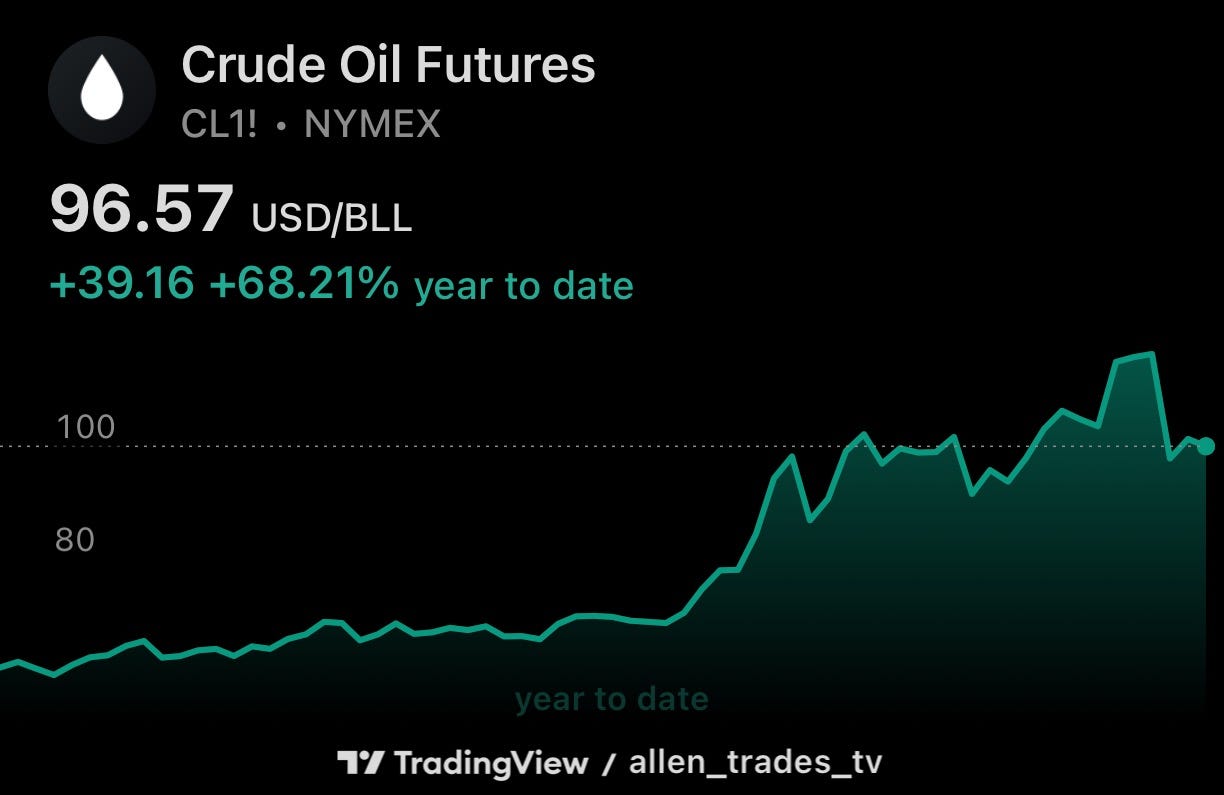
The Trump administration’s announcement of a U.S. Navy blockade of the Strait of Hormuz landed like a stone in still water. Roughly 20% of global oil supply moves through that channel. When that route gets disrupted, even as a threat, Brent crude doesn’t wait for confirmation. It reprices first and asks questions later.
For oil futures traders, this is the kind of macro event you spend months watching for: a clear catalyst with a directional bias and a defined structure to trade around. The move in crude has nothing to do with technicals in the short run. It has everything to do with supply route risk being recalculated in real time.
The lesson here is not about $CL setups. It is about respecting when macro overrides structure. In those moments, your job is not to fight the news, it is to identify whether the level you were watching still means what you thought it meant.
MSFT: Discount or Distribution?
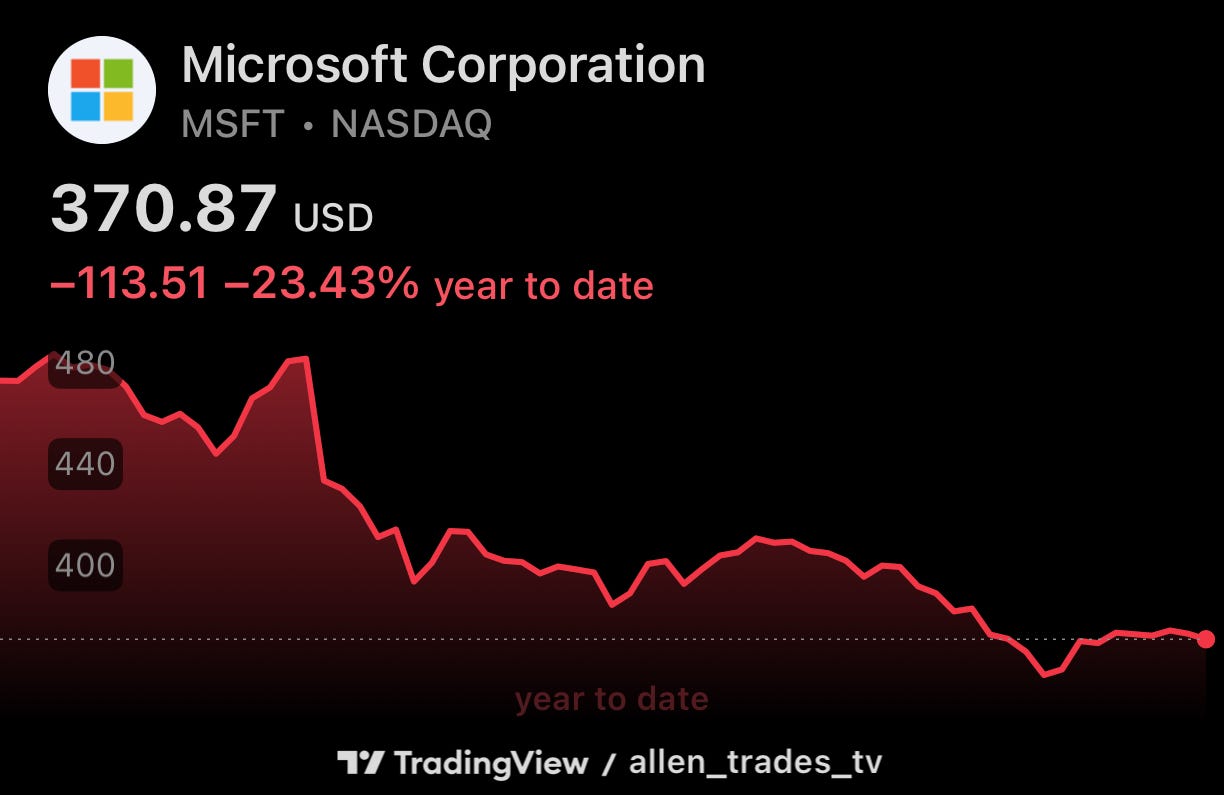
Microsoft is sitting at roughly $370, down over 30% from the $555 high. That kind of drawdown in a mega-cap name tends to split traders into two camps: buyers who see value, and shorts who see a trend.
The more useful question is: where does the bull case break?
The $344.79 level on the daily is the line that matters. Above it, the structure still supports a recovery thesis. Price is testing a support shelf that held in early 2025. The company’s fundamentals have not changed enough to justify a 30% haircut, but the market does not care about your DCF model until it decides to care.
This is not a call. It is a framework. If you are long, you know your level. If you are waiting, you know what would confirm the thesis. If you do not have those answers before you enter, the trade will answer them for you, usually at the worst time.
Tesla and the Catalyst Question
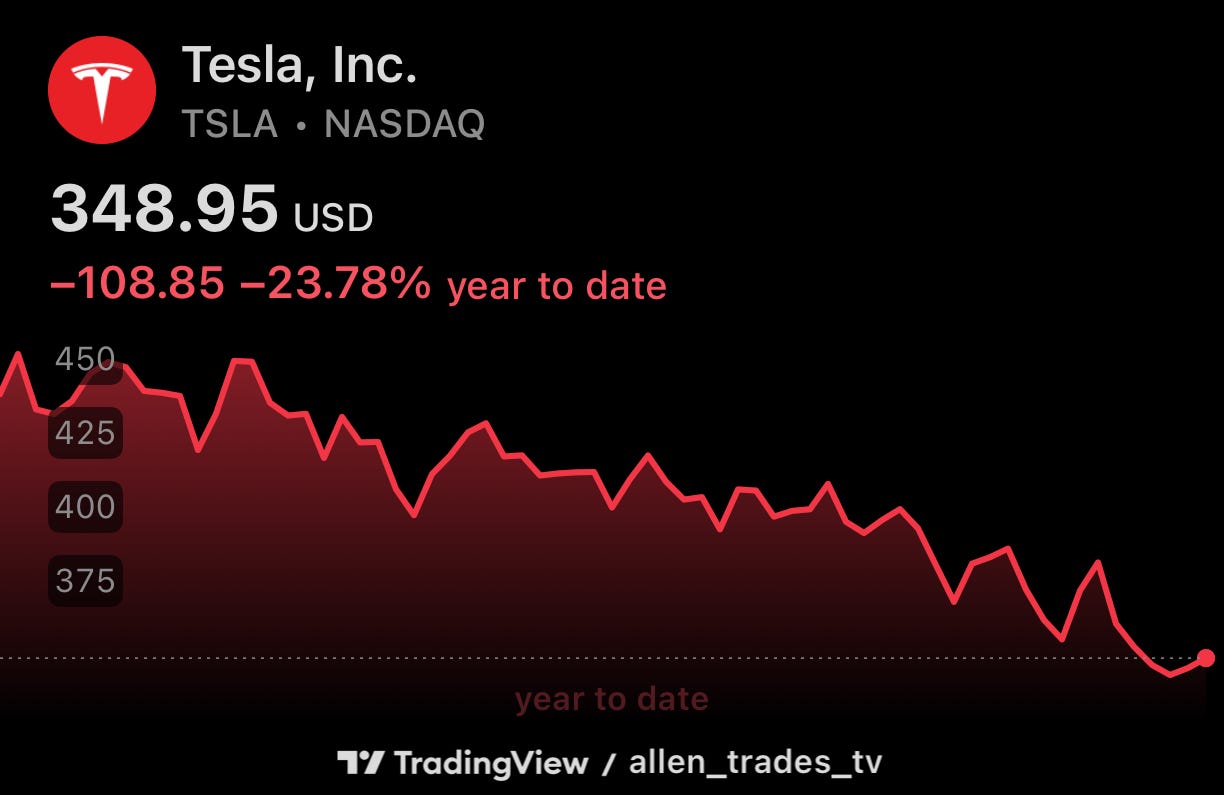
TSLA has been sitting at a key support zone, the same level that launched the last significant rally. Price respecting a level twice is meaningful. Price respecting it three times is a pattern. Patterns hold until they do not.
Then came the FSD approval in the Netherlands. First European country to greenlight Full Self-Driving (Supervised). That is not a small development. It opens the regulatory door for broader EU rollout, and European market penetration has been one of the more stubborn missing pieces in the Tesla growth story.
The question traders are asking is whether this is the catalyst that gives the technical setup legs. Maybe. But a catalyst alone does not make a trade. The level still has to hold, and the broader market environment, particularly with oil in motion and risk appetite shifting, does not make that a clean answer.
Watch the level. Let price confirm.
Bitcoin at the Line
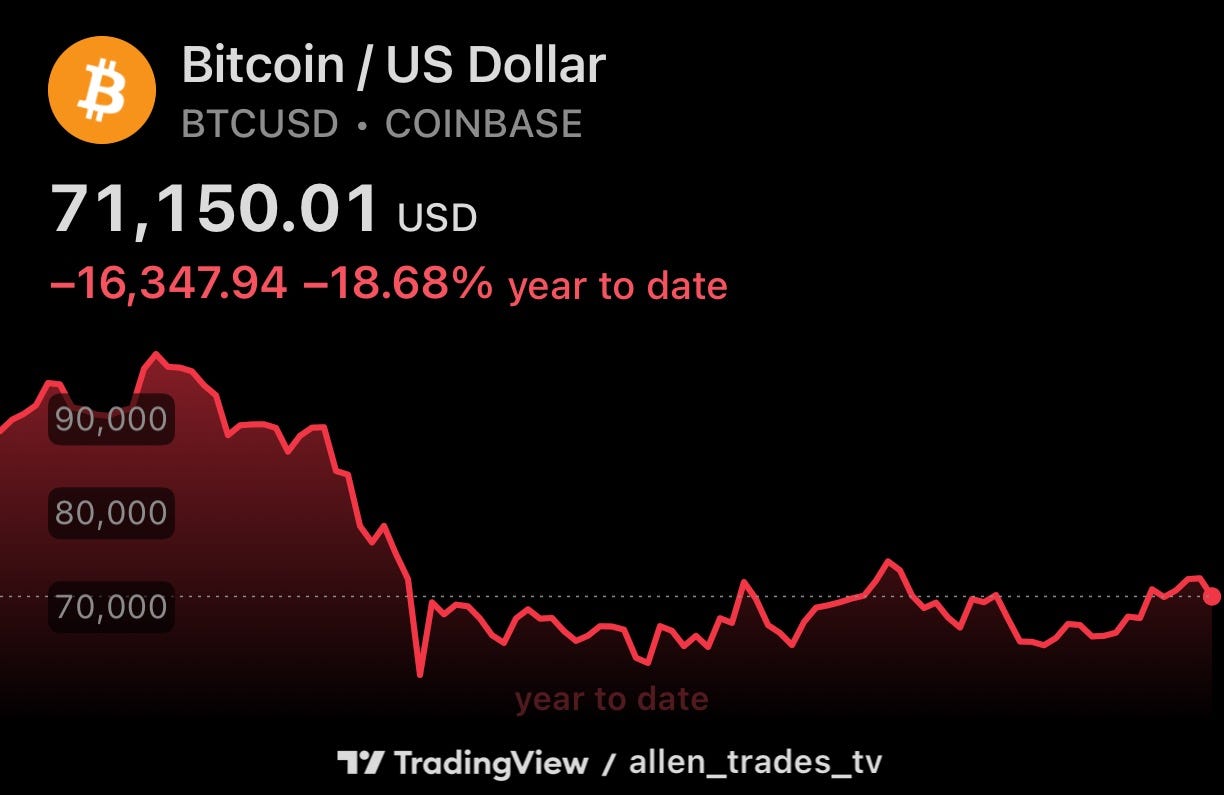
BTC bounced off $61,442 in February. That level is holding. If it continues to hold, $81,158 comes back into view as the next meaningful target.
There is no confirmation yet. Just structure. And in this environment, structure is what you trade, not narratives about cycles or macro narratives about safe haven flows. The level is the level. Respect it until it breaks.
What’s Coming This Week
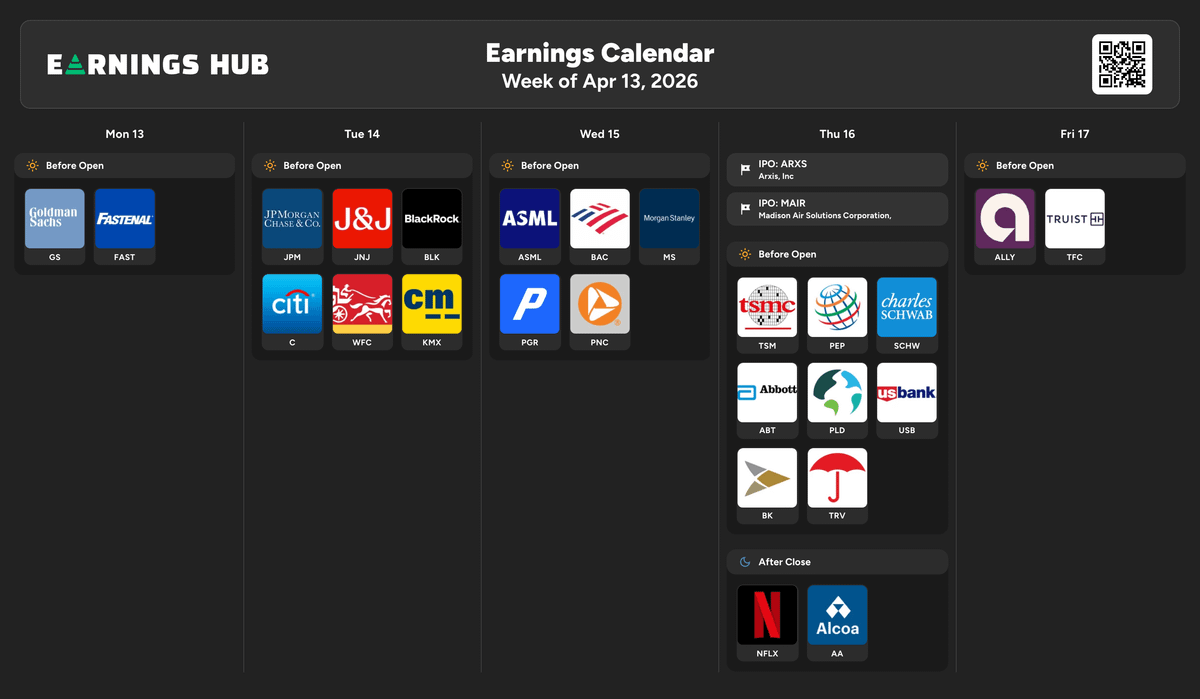
Earnings season resumes April 13-17. The names worth watching: $TSM and $NFLX. Taiwan Semiconductor will tell you something real about AI infrastructure demand and chip cycle timing. Netflix will tell you something about consumer spending and subscription durability in a risk-off environment.
Both reports drop into a market that is already processing a lot. Volatility won’t need much encouragement.
The Takeaway
This week was a reminder that structure and macro do not always cooperate. Your job is not to predict which one wins. Your job is to know what you are trading, why the level matters, and exactly where you are wrong.
If you are still building that discipline, that is what the Charting Futures community is for.